
Edge Computing & Hosting: Why Running Code Closer to Users Matters
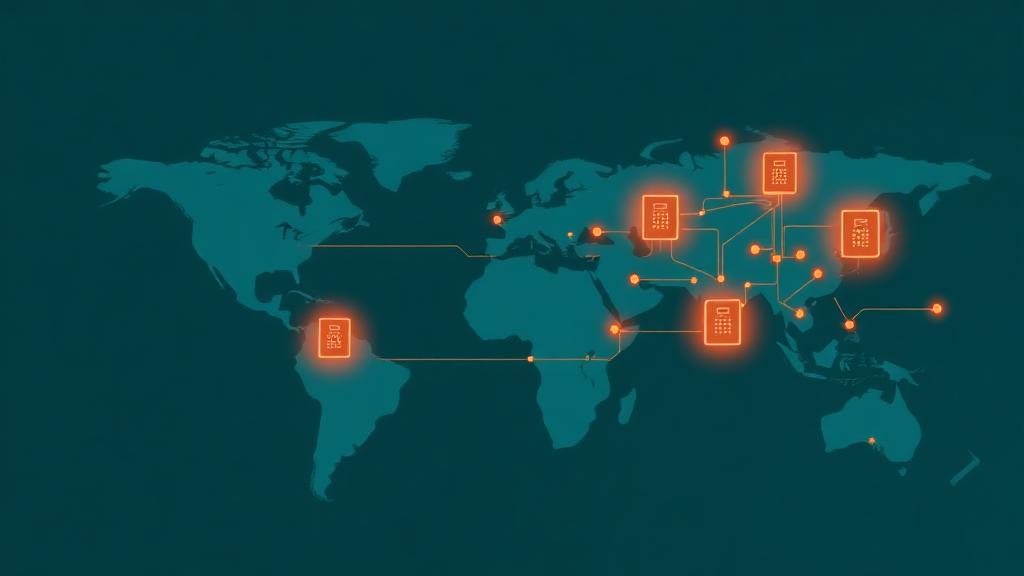
Your origin server is in Virginia. Your user is in Mumbai. That's 13,000 km of latency, and it's costing you conversions, SEO rankings, and user experience. Edge computing eliminates this gap by running your code at 100–450+ locations worldwide, serving every user from the nearest point. Here's how it works, when to use it, and which platforms deliver.

Web hosting enthusiast who tests providers and breaks down features, pricing, and real world speed
Quick Verdict
🏆 Cloudflare Workers
Best Overall (9.5/10)
330+ edge locations, 0ms cold starts, free tier with 100K req/day. Most mature edge platform with KV, D1, R2, and Durable Objects.
⚡ Vercel Edge
Best for Next.js (9.1/10)
Seamless Next.js integration. Edge Middleware runs auth, geo-redirects, and A/B tests at 110+ locations with zero config.
🦕 Deno Deploy
Best DX (8.8/10)
Native TypeScript, 0ms cold starts, built-in Deno KV (globally replicated). Cleanest developer experience for new projects.
What Is Edge Computing?
Edge computing moves application logic from a single centralized server to a distributed network of servers positioned close to end users. Instead of every request traveling to one data center (often thousands of kilometers away), requests are intercepted and processed at the nearest "edge" location, typically within 50ms of the user.
| Concept | Traditional Hosting | Edge Computing |
|---|---|---|
| Where code runs | 1 data center (e.g., us-east-1) | 100–450+ global locations |
| Latency for distant users | 150–350ms TTFB | 5–30ms TTFB |
| Scaling model | Vertical (bigger server) or horizontal (more servers) | Automatic, runs at every edge node simultaneously |
| Cold starts | Container: 100–500ms | V8 isolate: 0ms (Cloudflare, Deno) / 0–50ms (Vercel) |
| Pricing model | Fixed monthly (VPS) or provisioned capacity | Pay-per-request (often with generous free tiers) |
| Runtime | Full Node.js / Python / PHP / any language | V8 isolates (JS/TS) or Wasm (limited APIs) |
| Persistence | Local disk, attached databases | Edge KV, distributed SQLite, or proxy to origin DB |
| Best for | Complex stateful apps, admin panels, batch jobs | Low-latency reads, auth, SSR, API routing, personalization |
Edge vs Origin Server Hosting
| Factor | Origin Server | Edge Compute | Hybrid (Recommended) |
|---|---|---|---|
| User-facing pages | 200–400ms TTFB globally | 10–30ms TTFB globally | Edge SSR + origin API |
| Auth checks | Round-trip to origin: 150–300ms | Validated at edge: 5–15ms | JWT verification at edge, session DB at origin |
| API responses | Centralized, consistent | Fast but limited compute | Cache at edge, compute at origin |
| Database queries | Direct access, low latency to DB | Must proxy to origin or use edge DB | Read replicas at edge, writes to origin |
| File uploads | Direct to server/S3 | Limited (edge workers have body size limits) | Signed URLs at edge → direct upload to S3/R2 |
| Admin dashboards | Full control, complex queries | Overkill, low-traffic, needs full runtime | Keep on origin server |
| WebSockets | Full support | Limited (Cloudflare Durable Objects best option) | Edge for connection, origin for complex state |
Latency Impact on User Experience
| User Location | Origin (US-East) | With Edge | Improvement |
|---|---|---|---|
| New York, US | 25ms | 8ms | 68% faster |
| London, UK | 85ms | 12ms | 86% faster |
| Frankfurt, DE | 95ms | 10ms | 89% faster |
| Mumbai, India | 220ms | 18ms | 92% faster |
| Tokyo, Japan | 180ms | 15ms | 92% faster |
| Sydney, Australia | 250ms | 20ms | 92% faster |
| São Paulo, Brazil | 140ms | 14ms | 90% faster |
| Cape Town, SA | 280ms | 22ms | 92% faster |
Business impact: Amazon found every 100ms of latency costs 1% in sales. Google found 500ms slower load times reduce traffic by 20%. For a site doing $100K/month, reducing TTFB from 250ms to 20ms could recover $2,000–5,000/month in lost conversions.
Top Edge Computing Platforms
Cloudflare Workers
Best Overall9.5/10Pros
Cons
Verdict: The most mature and feature-complete edge platform. Best network size, zero cold starts, and a generous free tier make it the default choice for most edge workloads.
Vercel Edge Functions
Best for Next.js9.1/10Pros
Cons
Verdict: If you're building with Next.js, Vercel's edge integration is unmatched. Middleware runs at the edge by default, making auth checks, A/B tests, and geo-redirects trivially fast.
Deno Deploy
Best DX8.8/10Pros
Cons
Verdict: The cleanest developer experience for TypeScript developers. Deno KV provides built-in globally-replicated storage without external databases. Best for green-field projects.
AWS Lambda@Edge / CloudFront Functions
Best Enterprise8.6/10Pros
Cons
Verdict: Best for enterprises already invested in AWS. CloudFront Functions handle simple tasks (header manipulation, redirects) cheaply; Lambda@Edge handles complex logic but with cold start trade-offs.
Fastly Compute
Best for WebAssembly8.4/10Pros
Cons
Verdict: The performance leader for compute-intensive edge workloads. WebAssembly support means you can run Rust or Go at the edge, ideal for image processing, auth token validation, and real-time data transformation.
Platform Comparison Table
| Feature | Cloudflare Workers | Vercel Edge | Deno Deploy | Lambda@Edge | Fastly |
|---|---|---|---|---|---|
| Edge locations | 330+ | 110+ | 35+ | 450+ (CDN) / 13 (Lambda) | 90+ |
| Cold starts | 0ms | 0–50ms | 0ms | 100–500ms | <1ms |
| Runtime | V8 isolates | V8 (Edge Runtime) | V8 isolates | Node.js / Python | Wasm (Rust/Go/JS) |
| Free tier | 100K req/day | 100K exec/month | 1M req/month | 1M req/month (CF Fn) | Limited trial |
| Edge storage | KV, D1, R2, DO | Edge Config | Deno KV | DynamoDB / S3 | Config Store (limited) |
| Max exec time | 30s (paid) | 25s | 50s (paid) | 30s (Lambda@Edge) | 30s |
| WebSocket support | ✅ (Durable Objects) | ❌ | ✅ | ❌ | ❌ |
| Git deployment | ✅ Wrangler CI | ✅ Native | ✅ Native | ✅ (via SAM/CDK) | ✅ CLI |
| Framework support | Any JS/TS | Next.js (best), SvelteKit | Fresh, Hono | Any Node.js | Any (via Wasm) |
| Cron / scheduled | ✅ Cron Triggers | ✅ Cron Jobs | ✅ Deno.cron | ✅ EventBridge | ❌ |
| Best DX | ⭐⭐⭐⭐ | ⭐⭐⭐⭐⭐ (Next.js) | ⭐⭐⭐⭐⭐ | ⭐⭐⭐ | ⭐⭐⭐ |
Edge Functions & Serverless at the Edge
| Pattern | How It Works | Latency Saved | Best Platform |
|---|---|---|---|
| Edge SSR | Server-render HTML at the nearest edge node, cache the result | 50–200ms per page load | Vercel (Next.js) / Cloudflare (Hono/SvelteKit) |
| Edge middleware | Intercept requests before they reach origin: auth, redirects, headers | 100–300ms per request | Vercel Edge Middleware / Cloudflare Workers |
| API gateway at edge | Route, rate-limit, and transform API requests at the edge | 80–250ms per API call | Cloudflare Workers / Fastly Compute |
| Edge auth (JWT validation) | Verify tokens at the edge, no round-trip to auth server | 100–200ms per auth check | Cloudflare Workers / Vercel Middleware |
| A/B testing at edge | Split traffic before page loads, no client-side flicker | Eliminates layout shift + 50–100ms | Cloudflare Workers / Vercel Edge Config |
| Geo-routing | Serve location-specific content (language, pricing, compliance) | Eliminates redirect chains (200–500ms) | Cloudflare Workers (request.cf object) |
| Image optimization | Resize, compress, convert images on-the-fly at the edge | Reduces payload 40–70% | Cloudflare Images / Fastly Image Optimizer |
| Edge caching with revalidation | Serve stale content instantly, revalidate in background | 0ms TTFB for cached content | Cloudflare (stale-while-revalidate) / Vercel ISR |
Real-World Use Cases
| Use Case | Without Edge | With Edge | Business Impact |
|---|---|---|---|
| E-commerce product pages | 300ms TTFB, generic content | 20ms TTFB, geo-specific pricing & currency | 15–25% higher conversion rate |
| SaaS login / auth | Auth check: origin round-trip 200ms | JWT verified at edge: 10ms | Perceived instant login; reduced auth server load by 90% |
| Media / news sites | Origin-rendered pages; slow for global readers | Edge-cached SSR with ISR revalidation | 3–5x more pages/session; better ad revenue |
| Multi-region SaaS | Single-region API; slow for 60%+ of users | Edge API layer + regional read replicas | Global P95 latency under 50ms |
| A/B testing / personalization | Client-side flicker, layout shifts (bad CLS) | Server-side split at edge; zero flicker | Accurate test results; improved CLS score |
| Bot protection / rate limiting | WAF at origin; bot traffic still reaches server | Block at edge before reaching origin | 80% less origin server load; lower infrastructure costs |
| API monetization | Centralized API gateway with regional latency | Edge API gateway with per-key rate limiting | Better DX for API consumers; lower churn |
Edge Caching Strategies
| Strategy | How It Works | Best For | Cache Hit Rate |
|---|---|---|---|
| Static asset caching | CDN caches images, CSS, JS with long TTLs + content hashing | All sites; this is table stakes | 95–99% |
| Full-page caching | Cache entire HTML responses at edge; purge on content change | Marketing sites, blogs, product pages | 80–95% |
| Stale-while-revalidate | Serve cached version instantly; update cache in background | News sites, dashboards, frequently-updated content | 95%+ (always serves cached) |
| ISR (Incremental Static Regeneration) | Statically generate pages; revalidate on interval or on-demand | E-commerce catalogs, CMS-driven sites | 90–98% |
| Edge-side includes (ESI) | Cache page shell; fetch dynamic fragments at the edge | Personalized headers/footers on cached pages | 70–85% (partial cache) |
| Cache-key variation | Cache different versions based on geo, device, cookies, headers | Multi-language sites, A/B tests, mobile/desktop variants | 60–80% per variant |
| Write-through caching | Write to origin DB + edge KV simultaneously; reads always from edge | Product inventory, pricing, feature flags | 99%+ (reads from KV) |
Security at the Edge
| Security Feature | Edge Implementation | Advantage Over Origin-Only |
|---|---|---|
| DDoS mitigation | Absorb attacks across 300+ global nodes; traffic never reaches origin | Origin stays online even under 1Tbps+ attacks |
| WAF (Web Application Firewall) | Block SQLi, XSS, and OWASP Top 10 at the edge before reaching app | Reduces origin server processing by 30–50% |
| Bot detection | Challenge suspicious traffic (Turnstile, hCaptcha) at the edge | Bots blocked before consuming origin resources |
| Rate limiting | Per-IP or per-API-key limits enforced at every edge node globally | Consistent limits regardless of user location |
| Geo-blocking | Block or allow traffic by country/region at edge routing level | Zero latency cost, blocked before any compute |
| mTLS / client certificates | Validate client certificates at edge for zero-trust architectures | Origin only receives pre-authenticated requests |
| Token validation | Verify JWTs, API keys, and session tokens at the edge | Auth failures rejected in <5ms instead of round-trip to auth server |
| Content Security Policy | Inject CSP headers at the edge for all responses consistently | Centralized security policy across all origins and microservices |
Edge Computing Pricing Breakdown
| Platform | Free Tier | Paid Plan | Cost at 10M req/mo | Cost at 100M req/mo |
|---|---|---|---|---|
| Cloudflare Workers | 100K req/day (3M/mo) | $5/mo (10M req included) | $5/mo | ~$50/mo |
| Vercel Edge | 100K exec/month | $20/mo Pro | $20/mo (included) | ~$120/mo (overage) |
| Deno Deploy | 1M req/month | $20/mo (5M req) | $20/mo | ~$100/mo |
| AWS Lambda@Edge | 1M req/mo (Lambda free tier) | $0.60/M requests + compute | ~$15/mo | ~$100/mo |
| AWS CloudFront Fn | 2M invocations/mo free | $0.10/M requests | ~$1/mo | ~$10/mo |
| Fastly Compute | Limited free trial | Usage-based | ~$30/mo | ~$200/mo |
Cost comparison: A $20/mo VPS handles ~5–10M requests/month at 150–300ms latency. Cloudflare Workers handles 10M requests at 5–30ms latency for $5/month. Edge computing is often cheaper AND faster than traditional hosting for read-heavy workloads.
When NOT to Use Edge Computing
| Scenario | Why Edge Doesn't Fit | Better Alternative |
|---|---|---|
| Heavy database writes | Edge functions add latency by proxying writes to a centralized DB | Origin server co-located with database (same region) |
| Long-running jobs (>30s) | Edge functions have execution time limits (10–50s max) | Traditional serverless (Lambda/Cloud Functions) or dedicated workers |
| Large file processing | Edge workers have memory limits (128MB typical) and body size limits | Origin server with streaming upload to S3/R2 |
| Complex business logic | Edge runtimes lack full Node.js APIs (no fs, child_process, native modules) | Traditional Node.js/Python server |
| Single-region user base | If 90% of users are in one city, edge adds complexity without latency benefit | Single-region VPS or managed hosting |
| Admin dashboards | Low traffic, complex queries, full framework features needed | Standard server-rendered app (Next.js on Node, Laravel, Django) |
| ML inference (large models) | Edge workers can't load large models (memory/CPU limits) | GPU servers or dedicated ML inference endpoints |
| WebSocket-heavy apps | Limited WebSocket support (only Cloudflare Durable Objects, really) | Dedicated WebSocket server (Socket.io, Ably, Pusher) |
Migrating to the Edge
| Step | Action | Tools / Tips |
|---|---|---|
| 1. Audit current architecture | Map which requests are latency-sensitive vs compute-heavy | Use RUM (Real User Monitoring) to identify slow routes by region |
| 2. Identify edge candidates | Auth checks, SSR pages, API routing, static generation, redirects | Start with middleware, lowest risk, highest impact |
| 3. Check library compatibility | Verify dependencies work in edge runtimes (no Node-specific APIs) | Use edge-runtime npm package or Vercel's Edge Runtime compatibility list |
| 4. Set up edge layer | Deploy edge functions alongside existing origin (hybrid architecture) | Cloudflare: wrangler dev / Vercel: next dev / Deno: deployctl |
| 5. Route selectively | Send specific paths to edge, fall through to origin for everything else | Use URL pattern matching in edge worker to split traffic |
| 6. Add edge caching | Cache responses at edge with appropriate TTLs and invalidation | Start with stale-while-revalidate for dynamic content |
| 7. Monitor and iterate | Compare edge vs origin TTFB, error rates, and costs | Use Cloudflare Analytics, Vercel Analytics, or custom logging |
| 8. Expand edge coverage | Move more routes to edge as you gain confidence | Target highest-traffic routes first for maximum latency reduction |
Edge Readiness Checklist
Good Edge Candidates ✅
Keep on Origin ⚠️
Frequently Asked Questions
What is edge computing in web hosting?
How much faster is edge computing vs traditional hosting?
What's the difference between edge computing and a CDN?
Is edge computing more expensive than traditional hosting?
Can I use edge computing with my existing backend?
What programming languages work at the edge?
How do edge databases work?
Is edge computing good for SEO?
Ready to Move Your App to the Edge?
Compare hosting providers with edge computing support, global CDNs, and the infrastructure your app needs for sub-30ms response times worldwide.
Find Edge-Ready Hosting